
Choosing the best tankless water heater can transform your home’s hot water supply, offering endless on-demand warmth while potentially saving you money on energy bills. Unlike traditional bulky tanks, these compact units heat water only when you need it, freeing up valuable space and reducing standby energy loss. Whether you’re looking for an electric model for a small apartment, a powerful natural gas unit for a large family, or even a portable solution for outdoor adventures, our in-depth guide will help you navigate the options and find the perfect fit for your lifestyle and needs.
Quick Product Comparison
Our Top 4 Best Tankless Water Heater Reviews – Expert Tested & Recommended
1. EcoSmart ECO 11 Electric Tankless Water Heater, 13KW 240V with Patented Self-Modulating Technology
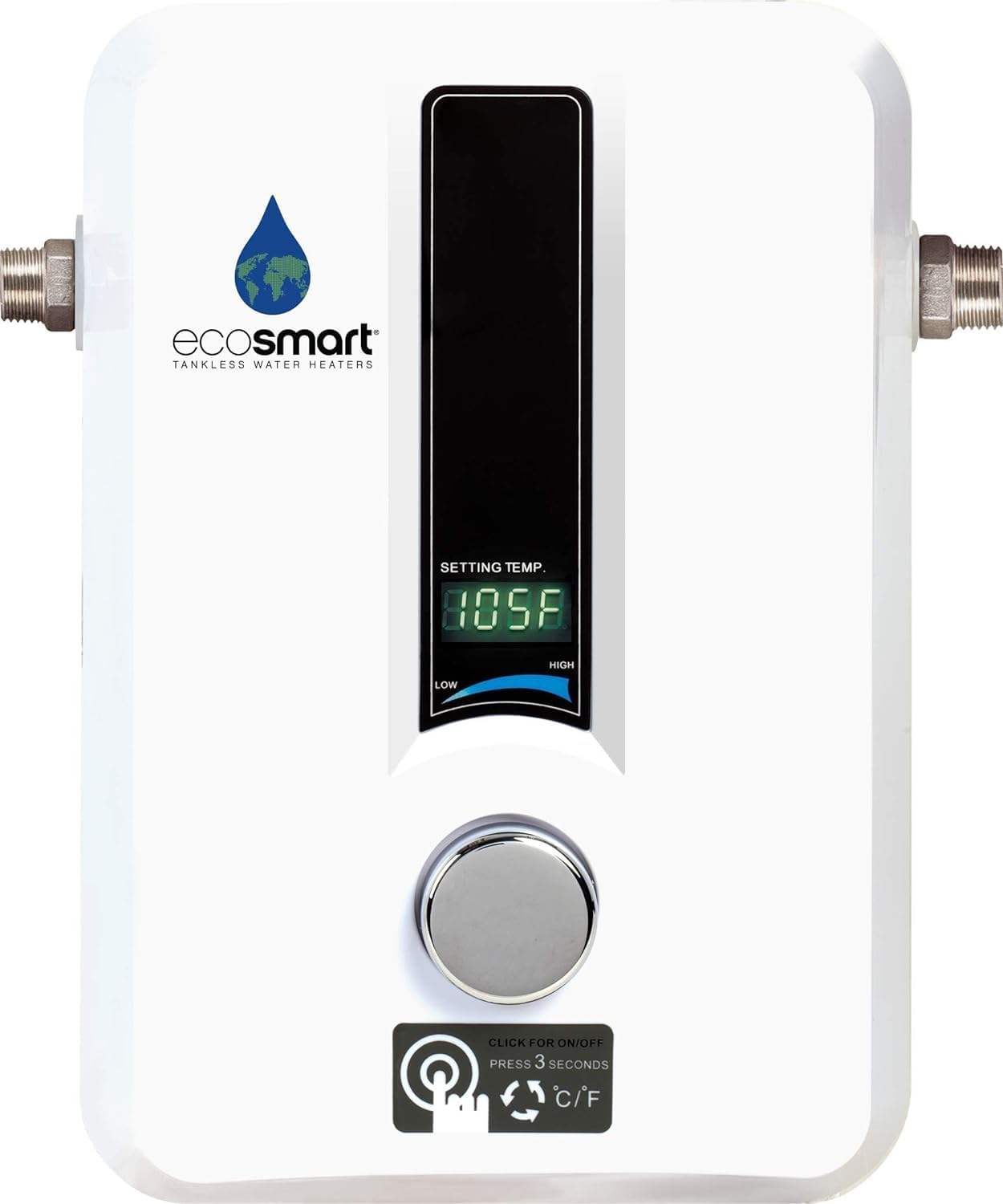
The EcoSmart ECO 11 Electric Tankless Water Heater is a fantastic solution for those seeking reliable, continuous hot water without the bulk of a traditional tank. Its patented self-modulating technology ensures consistent temperatures, adapting to your needs to prevent cold shocks. This compact unit is an excellent choice for smaller homes or as a dedicated hot water source for specific areas.
Key Features That Stand Out
- ✓ Endless Hot Water: Provides hot water on demand, ensuring you never run out during showers or other uses.
- ✓ Patented Self-Modulating Technology: Continuously monitors water temperature and flow rates, maintaining consistent hot water within 1 degree of your chosen setting.
- ✓ Space-Saving Design: At 11.5 x 8 x 3.75 inches, it’s 90% smaller than conventional tank heaters, allowing for flexible installation on a wall or at the point of use.
- ✓ Energy Efficient: Heats water only when needed, reducing standby heat loss and contributing to lower electricity bills.
Why We Recommend It
We highly recommend the EcoSmart ECO 11 for its efficient performance and compact design. It delivers on its promise of consistent, on-demand hot water, which is a major convenience. The energy savings and minimal footprint make it a smart upgrade for many households, especially those replacing an aging tank unit.
Best For
This electric tankless water heater is ideal for smaller homes, apartments, condos, or as a point-of-use heater for a specific bathroom or sink where space is limited and consistent hot water is desired.
Pros and Cons
Pros:
- Compact size saves significant space.
- Provides endless hot water on demand.
- Precise temperature control maintains consistent warmth.
- Energy-efficient operation reduces utility costs.
Cons:
- Requires a dedicated 60 amp breaker and appropriate wiring for safe operation.
- Flow rate can be limited in colder climates, potentially affecting multiple simultaneous uses.
- May require plumbing adapters for replacement installations.
Customer Reviews
Customer Review: “This water heater works great. It is so much better than having a traditional water heater. It takes up so much less space and showers can last forever if you want them to.It heats up quickly and provides steady hot water for as long as you need.We are in Ohio and this runs a shower in the winter. Flow does have to be limited but its still a very enjoyable enjoyable shower.Setup was mostly easy, but you will probably need adapters to replace your current water heater.Overall this is a great value and I can recommend it.”
Customer Review: “We purchased this water heater based on comments here and like others, we agree that it is a great water heater.We are using it as a whole-house water heater replacing a sixty gallon tank that started leaking. We expected that there would be some adjustment in going tank-less and using an 11KW as a whole-house water heater, for example like not using other faucets while showering, etc., but we were willing to make that sacrifice because we were going to be saving money on the heater, and on electricity with the bonus of doing the right thing for the environment.Well, this heater exceeded expectations by a LOT. We keep it set at 110 degrees which makes for very hot shower but not scalding and no problems using other sinks at the same time. My wife told me she took a shower while the dishwasher was running and expected it to be “cool” but to her surprise there was no problem handling the dishwasher and shower at the same time. It has been about a month since we installed the water heater in our 4 bedroom, 3.5 bath house and we have forgotten that we are heating water on demand because there is no noticeable difference compared to when we had a sixty gallon tank.One of our showers is a double shower and I tried that out, no problem the heater handled both fine with no reduction in temperature. You should be aware our house is a Florida house so our city water comes in at around 68 degrees. If you had well water you will have different results as you will be heating much colder water. One other thing to note, if you take a bath you will want to crank the heater to higher temp, it is so easy with the knob and digital readout I taught my daughter to crank it before her bath so she can add extra hot water to “freshen” up her long and hot bath otherwise 110 degrees isn’t hot enough to heat up a cooled bath do to rapid heat loss. You can buy the remote control for about forty bucks and adjust the heater setting from anywhere, or just keep your heater set to a higher temp. We like running it at 110 so that we have maximum energy savings and eliminate scalding risks.I highly recommend this heater, keep in mind that you need upgraded wiring, you will probably have 220 volt electric for your existing water heater but ours was only 30 amp and this one calls for 60 amp so that means getting MUCH thicker wire that is expensive and hard to pull. If your heater can be located close to the breaker box you will save money in wire and the hassle of pulling super thick wire. I bought wiring and breaker for 50amp by mistake and didn\’t notice until after the installation was finished. We must have never drawn more than 50 amps because the breaker has NEVER kicked even running two showers so I plan on keeping the 50 amp breaker as the wire we used is safe for only up to 50 amps and I\’d need to replace the wire to even thicker.”
2. Hike Crew Portable Propane Water Heater & Shower Pump for Camping, Hiking, Auto Safety Shutoff
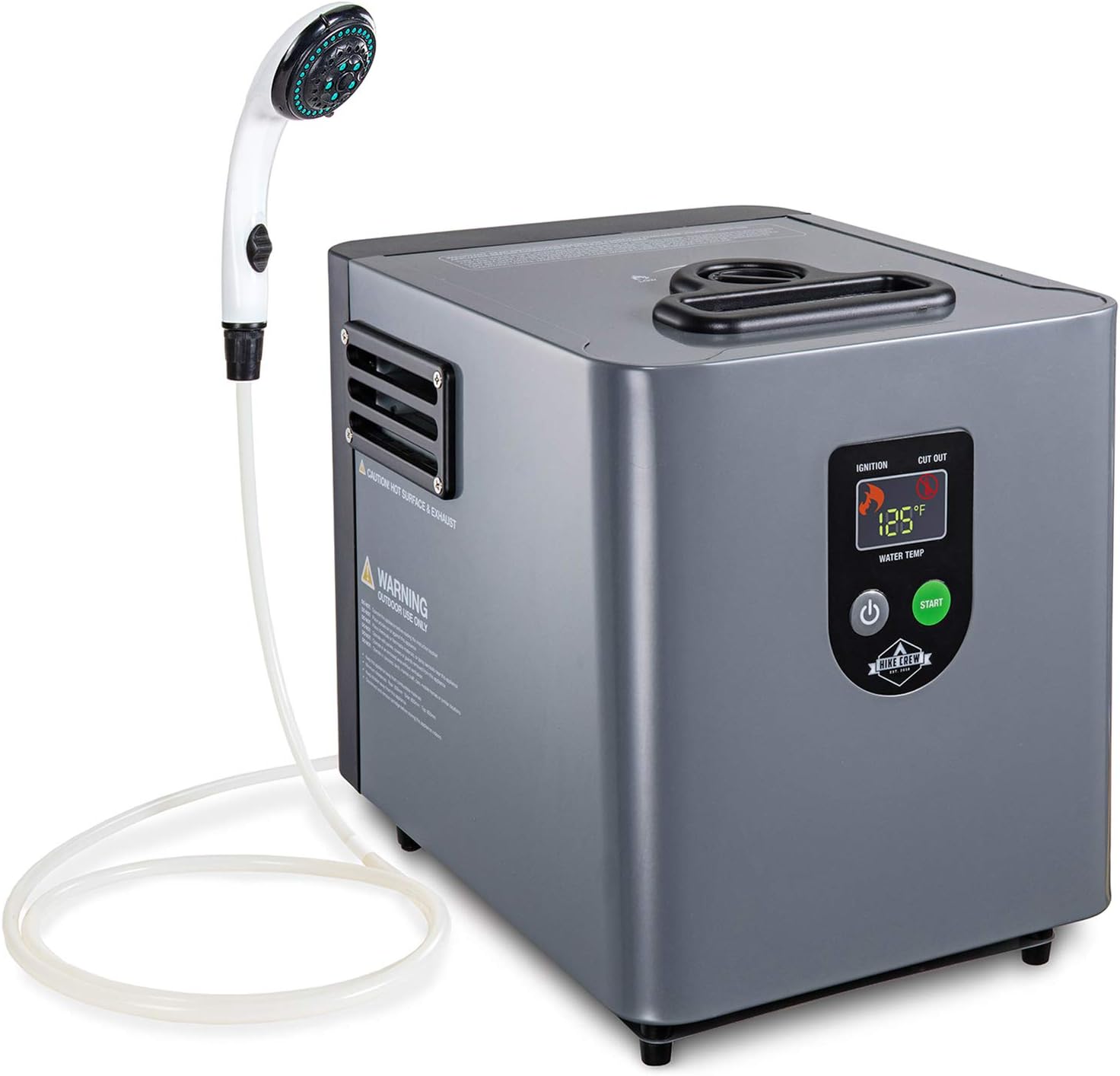
For adventurers and outdoor enthusiasts, the Hike Crew Portable Propane Water Heater & Shower Pump is a game-changer. This innovative system provides hot water for showering, washing dishes, or even filling a small portable water heater without needing an electrical hookup. It’s truly a versatile companion for any off-grid experience.
Key Features That Stand Out
- ✓ Portable Outdoor Design: Runs on a propane gas tank, making it perfect for camping, hiking, tailgating, or any remote location.
- ✓ Integrated Shower Pump: Comes with its own water pump, ensuring proper pressure and flow for the shower head and faucet.
- ✓ Temperature Control: Features a water temperature control knob, allowing you to adjust the warmth to your preference.
- ✓ Versatile Attachments: Includes a hand faucet/spigot and a shower head with three adjustable spray patterns for various uses.
- ✓ Auto Safety Shutoff: Built-in safety features provide peace of mind during operation.
Why We Recommend It
This Hike Crew unit earns our recommendation for its exceptional portability and self-sufficiency. It delivers on-demand hot water in situations where traditional heaters are impossible, making outdoor living far more comfortable. The all-in-one design with a pump simplifies setup considerably.
Best For
This portable tankless water heater is ideal for campers, RV owners, hikers, emergency preparedness kits, or anyone needing hot water away from conventional power and plumbing. It can even double as a temporary heater for small pools.
Pros and Cons
Pros:
- Completely portable and self-contained with a pump.
- Easy to set up and operate for instant hot water.
- Adjustable water temperature for comfort.
- Suitable for a variety of outdoor washing and showering needs.
Cons:
- Water pressure may not be as strong as a home system.
- Requires an adapter for standard 20-lb propane tanks (small camping tanks run out quickly).
- Plastic quick disconnects might be less durable over long-term heavy use.
Customer Reviews
Customer Review: “Great Budget Pool Heater Alternative – Works surprisingly well!I purchased this Hike Crew Portable Propane Water Heater & Shower Pump to replace a Camplux wall-mounted version, which didn’t come with its own pump. Finding a compatible pump for that unit was frustrating—I eventually got it to work by hooking it up to my pool filter and adjusting the pressure, but it was a real pain.I chose this unit because it comes with its own pump, so I knew the pressure would be right. While the water pressure isn’t as strong as I’d like, it does function seamlessly. The Camplux had a stronger flow but used more propane, whereas this one is more efficient in that regard.I’m using it as a pool heater for my Intex 9.3 x 6.5 x 33-inch pool (approx. 1,200 gallons), which I insulated with reflective material and connected to an Intex filter rated for 8,000 gallons. It does an excellent job heating the water. One night, we accidentally left the lid off and kept the heater running. To my surprise, I woke up to a 95°F pool in mid-March, despite daytime temperatures around 58°F and overnight lows in the high 40s/low 50s. That was very impressive!The design is simple and user-friendly—just a power button and a start button. You will need a propane adapter to connect it to a standard 20-lb propane tank, which I highly recommend because those small camping propane bottles won’t last long. With a 20-lb tank, you can heat the pool for days.I also use this in conjunction with a heat pump pool heater—the propane heater quickly brings the water up to temperature, and then the heat pump maintains it. This combination works fantastically.While this isn’t its intended use, others have had success with it as a pool heater, and so far, it’s working great for me. At $250-$300, it’s a budget-friendly way to keep a small pool warm. Highly recommended if you’re looking for an inexpensive pool heating solution.”
Customer Review: “I was a little worried about a lot of the negative reviews, but I still took the chance on buying this hit water heater. I will be using the water heater when I use my cargo trailer for camping, soecifucalky with my shower tent with 7 gal water jugs.The heater comes very well packed, just know that pieces are packed in the Styrofoam that encases the heater. The included carrying bag is nice, albeit it’s a very tight fit in the main heater compartment of the bag. I decided to try the heater out to ensure it works and to see if some of the complaints in other reviews were valid.For my test I used a small camping propane tank, when I use it for real, I’ll use a grill sized tank. I read the direction a couple times to make sure I was following set up directions. The hose quick disconnect are OK, they are plastic so you have to be firm when making the connection to either the water inlet and if using the shower hose which attaches to the faucet end. The water pump has enough weight to it, that it sinks to the bottom and stays upright. I then hooked up the propane and checked for leaks, thankfully there hasn’t been any leaks so far. I turned the heater on and water flowed out the faucet and the heater was ignited…hot water started to flow. My only complaint is the flow rate valve on the faucet does not turn off the water. The water flow rate is adjustable, but it doesn’t shut off the water completely. After I ran a few gallons thru, I started messing with the tempature adjustment…the water can get very hot, so be cautious and set up the temp for kiddos! I refilled my 7 gallon water jug, hooked up the shower hose/head and started the unit up. 7 gallons will net you about 12.5 mins of continuous hot water flow. The shower head does have an on/off water flow vale so you can get much longer use out of 7 gals. The heaters ignition does stop and start like it’s supposed to when you shut the water off and on. When the water jug is emptied, the burner quit like it’s supposed to. I refilled the 7 gal water jug, and swapped out the shower head with my out shower head and started my test. My other shower head gives better pressure but conserved water a little better with 13.5 mins of continuous hot water flow.So far I’m pretty impressed with this tankless hot water heater. I’ve run 21 gallons of water thru it, with no leaks and flawless operation. The weakest link may be the quick disconnect. Be firm, but don’t be a gorilla with it. I have a few camping trips coming up and will update my review as needed…but for now, 5 stars!”
3. Rheem 18kW 240V Tankless Electric Water Heater, Energy Efficient for Endless On-Demand Hot Water
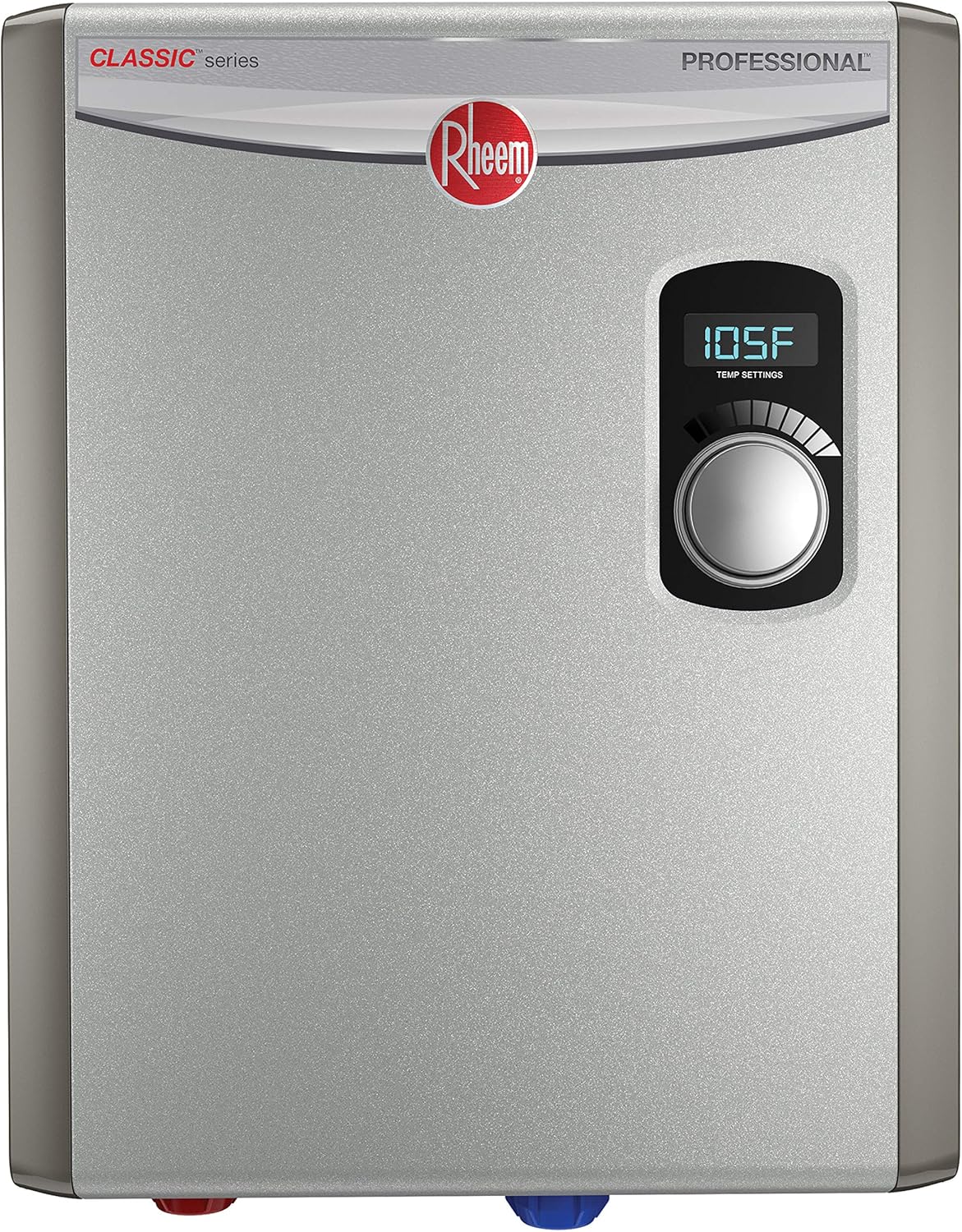
The Rheem 18kW 240V Tankless Electric Water Heater is a popular choice for those looking to upgrade to a tankless system without breaking the bank. As a well-known brand in water heating, Rheem delivers a reliable unit designed for energy efficiency and continuous hot water. Its external digital control allows for precise temperature adjustments.
Key Features That Stand Out
- ✓ External Digital Thermostatic Control: Allows for easy and precise temperature adjustments with +/- 1 degree accuracy via an LED display.
- ✓ Advanced Self-Modulation: Adjusts power usage to meet the exact hot water demand, optimizing energy consumption.
- ✓ Energy Efficient: Heats water on demand, eliminating standby heat loss associated with traditional tanks.
- ✓ Compact Design: Small footprint for flexible installation in various spaces.
Why We Recommend It
This Rheem tankless water heater is a solid option for households in regions with warmer incoming water temperatures. It provides consistent hot water for multiple fixtures when correctly sized and installed. The brand’s reputation for quality gives us confidence in its long-term performance.
Best For
This tankless electric water heater is best suited for medium-sized homes in climates where incoming groundwater temperatures are not excessively cold. It can effectively handle two simultaneous showers or a combination of tasks like a shower and a running dishwasher.
Pros and Cons
Pros:
- Reputable brand with reliable performance.
- Digital display for accurate temperature control.
- Good energy efficiency with self-modulating technology.
- Provides continuous hot water in suitable conditions.
Cons:
- Performance can significantly decrease with very cold incoming water temperatures.
- Installation often requires substantial electrical upgrades (e.g., 200-amp service, dedicated breakers), which can be costly.
- Not ideal for very large homes with many simultaneous hot water demands in cold climates.
Customer Reviews
Customer Review: “Love this tankless heater, it works great! Never run out of hot water while showering! There’s only 2 of us in our home so not sure how it would work with a family but I’m sure a bigger size or maybe another mounted where hot water is needed most??Would definitely buy again!!”
Customer Review: “There are many factors to consider before buying an electric tankless heater. By far the most important — at least for me — is whether the ground water temperature in your area is consistently warm enough to give the water heater a chance to succeed. I live in North Central Florida where the groundwater temperature is a rock-solid 72F (~22C) year-round. This is the ideal setup for tankless electrics; if you are far north this heater will likely fall short at the exact worst time, i.e. when it’s winter and you could really use a nice, hot shower. I recommend looking closely at the map provided on Rheem’s website and product pages to determine if this product is right for you.Second caveat, if you have a natural gas hookup, it is worth researching whether a gas-powered unit would be more efficient and/or less costly. There are considerations beyond this, of course, but those are the key ones that will determine whether you will be a happy camper or have cold water poured on those dreams of long, hot showers.If you’re still considering after reading the above, then the short of it is (drumroll) … I’m very satisfied and fully recommend making the jump to tankless!Here’s the long-winded version:There is about 25- to 30-feet of pipe to travel between the water heater and the showerhead in my bathroom, and it takes about 25 seconds (well, 22.93 … yes, I used a stopwatch) for the shower water to reach max temp. I did not use a stopwatch on my tank heater, but I’d guestimate it takes about 10 seconds longer for the tankless to deliver hot water than the tank unit it replaced. The main benefit, again, is that the tankless will continue to deliver hot water indefinitely while the tank is finite — so, no more playing beat the clock and if you get in the water and realize you forgot your razor or something.The temperature coming out of the showerhead lines up with the temperature on the digital display for the main shower. There is a slight, but noticeable (I’d say 2F-4F/1C-2C) drop from the maximum temperature for the shower furthest away from the water heater. There is enough overhead that you can crank it a few degrees higher — just be sure your shower handle can settle on something that won’t scald you if you go above the recommended!I can also verify that the throughput on the model I bought (24 kW) is enough to handle two showers running at the same as well as start a load of laundry on hot — I’m sure it could handle more, but there’s not a scenario I can imagine where I would need it to. All in all, the flow is as good or better than the water heater it replaced. The dimensions listed on the product page are accurate.As far as your monthly bill, this hasn’t made a significant impact although it may in the future. Here’s some data from my most recent utility bill compared to the same month last year. Keep in mind the following figures are the daily averages listed on my bill for the whole home, not just the heater, although it is the only major appliance we have replaced over the past 12 months.April 2025 = 33.90 kWh electric and 0.06 KGA water (whole-home daily average)April 2024 = 31.34 kWh electric and 0.03 KGA water (whole-home daily average)Based on the above info (and the prior two months), it’s essentially a wash — we’re using more power but only because we’re taking longer showers because we can actually enjoy the heat now rather than worrying whether we’re leaving enough water for everyone else! I’m sure that our water usage will level out once the novelty wears off, but that might be a while :)Now for the elephant in the room: Installation. If you can’t say right now, with confidence and without any further research, whether you could get away with a DIY install, I’ll answer the question for you: No, you can’t. The plumbing end of the equation is easy — the only hard part was ditching the tank unit. Beyond that, all you will need is a few fittings and a little pipe to hook it all up, plus the proper hardware to secure it to the wall. Any homeowner who would be comfortable ripping out a vanity sink/faucet and installing a new one should be able to do this portion themselves.The electrical hookup is another story. First, you will need 200-amp service to make this viable; if you don’t, save yourself the headache. Second, depending on the distance between your electrical box and your water heater, you may need to have an auxiliary breaker box installed, as we did. Just as water temperatures vary regionally, so do electrician’s rates. In our area we paid $850 to have a licensed electrician and his journeyman knock it out — it took them about three hours and that includes the cost of the pictured auxiliary box. I would expect that rate to be higher in major metros but hopefully it gives a ballpark for what you can expect to pay beyond the sticker price.”
4. Rinnai RU160iN Condensing Tankless Hot Water Heater, 9 GPM, Natural Gas for Indoor Installation
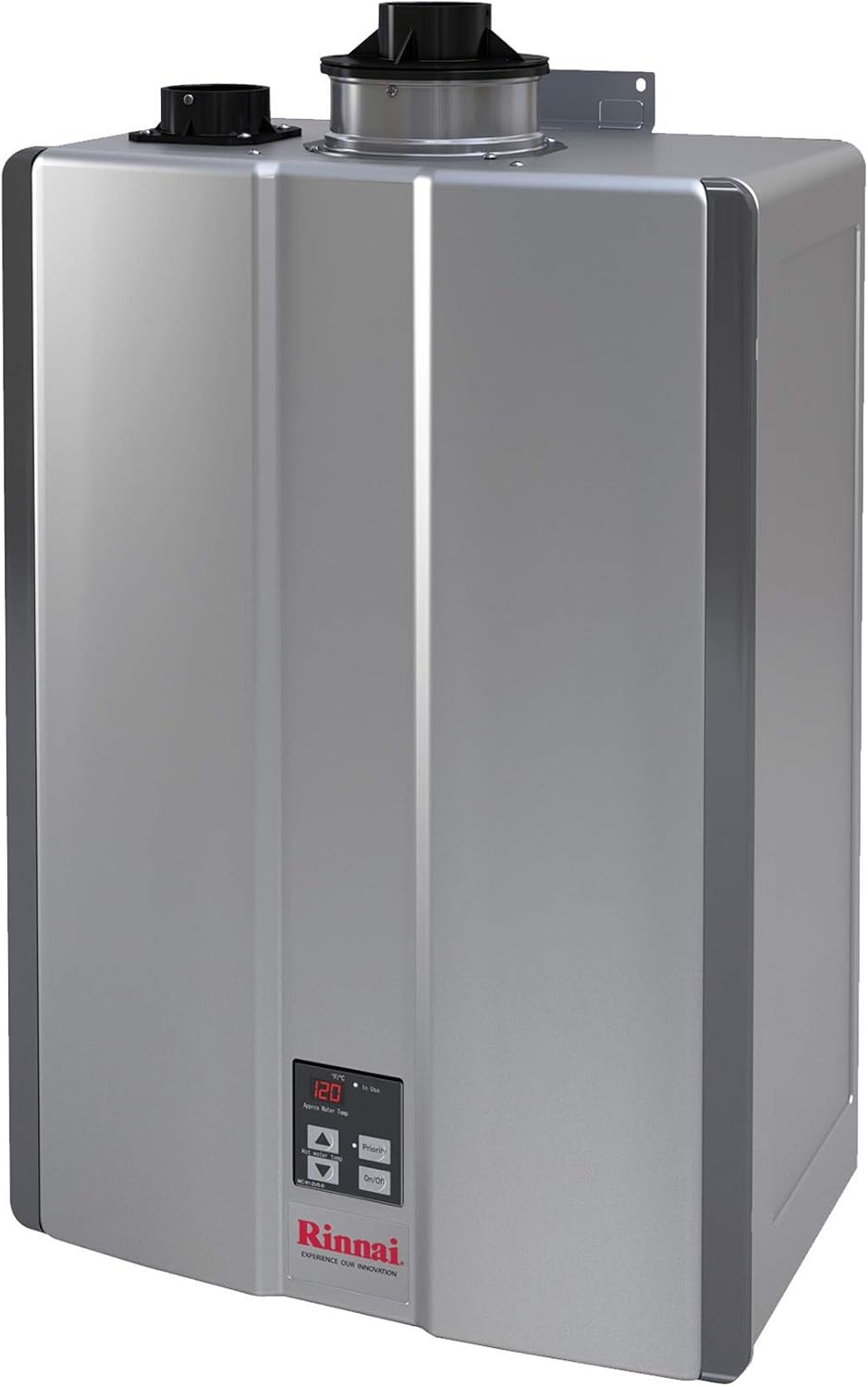
The Rinnai RU160iN Condensing Tankless Hot Water Heater represents a premium choice for whole-home hot water, especially for larger families. This natural gas unit boasts an impressive 9 GPM (gallons per minute) flow rate and condensing technology for maximum energy efficiency. Designed for indoor installation, it’s a powerful and reliable solution for constant hot water.
Key Features That Stand Out
- ✓ Endless Hot Water: Delivers continuous hot water flow throughout your entire home with a 9 GPM capacity.
- ✓ Condensing Technology: Highly energy-efficient design captures additional heat from exhaust gases, leading to significant energy savings.
- ✓ Space-Saving: Tankless design is much smaller than traditional tanks, freeing up valuable utility space.
- ✓ Circ-Logic Compatibility: Can be paired with an external pump for recirculation, reducing wait times for hot water at the tap.
- ✓ Natural Gas Powered: Utilizes natural gas for efficient and powerful heating.
Why We Recommend It
We recommend the Rinnai RU160iN for its superior performance and energy efficiency. The high GPM ensures multiple hot water demands can be met simultaneously, and the condensing technology truly maximizes fuel savings. It’s an investment that pays off in comfort and lower utility bills.
Best For
This natural gas tankless water heater is ideal for large households with high hot water demands, homes with multiple bathrooms, or those looking for the most energy-efficient gas-powered solution available. It requires access to a natural gas line for installation.
Pros and Cons
Pros:
- Exceptional 9 GPM flow rate supports multiple simultaneous uses.
- Highly energy-efficient due to condensing technology.
- Provides truly endless hot water without fluctuations.
- Quiet operation and compact size for indoor installation.
Cons:
- Higher upfront cost compared to electric models.
- Requires professional installation due to gas, electrical, and venting requirements.
- Slightly longer initial wait time for hot water on cold startup compared to a tank system.
Customer Reviews
Customer Review: “October 2023 – The takeaway is that anyone who complains about these not working well did not install it correctly (and won’t admit it). I am shocked at how well this thing works. I am still amazed how quiet it is. No further occurrences of errors. Works fine with furnace running even supplied through a 1/2in tee from a 1 in main supply to the basement.Sep 2023 Brief update: I had one occurrence of error 12 – flame out. But it hasn’t happened again. I hope it was a fluke caused by our gas supply and nothing else. If not, I’ll investigate and update my review afterward.Original review Aug 2023: My recent experience with the Rinnai RU199iN tankless hot water heater has, in a single word, been excellent! It’s like the ninja of water heaters – quiet and incredibly efficient in performance.Getting it up and running was straightforward, similar to the typical expectations of setting up the necessary plumbing, gas, venting, and electrical work. However, it’s important to note that this isn’t like replacing a conventional tank where everything falls into place easily. Rather, it is like a fitting jigsaw puzzle into place, not easy per se, but not too daunting either. The most fun was renting a rotary hammer from Home Depot to bore the vent holes though brick.For anyone worried about gas lines like me, you may appreciate this little surprise. The unit appears to have an internal gas booster pump. Ingenious, right? I chose to run it off of an existing gas line which was originally fed from a 1-inch line from the meter, with a brief downgrade to a 1/2 inch, before returning to a 3/4 inch. Despite my initial concern, it seems to function flawlessly under these conditions. But I am not complacent, and plan to eventually test all my gas appliances together in full throttle, just to be certain that the supply line capacity holds up.One of the most commendable features of the Rinnai RU199iN? Stable hot water output. Not once did I experience any hot water fluctuations during use. An absolute win! However, I did notice a slightly longer delay to get hot water on a cold startup, taking approximately 10 to 15 seconds longer compared to traditional heaters. But once it gets going, it provides steady, continuous hot water supply.Oh, and I must add – I did the installation myself. So, for all the DIY enthusiasts out there, this little project is quite manageable and rewarding.In conclusion, the Rinnai RU199iN tankless hot water heater has proven to be a stellar addition to my home. It delivers consistent performance, minimal noise, and solid dependability. If what you’re after is a top-notch appliance that couples functionality with ease of use, then the Rinnai RU199iN certainly fits the bill. Five stars for this one, without a second thought!”
Customer Review: “This unit outperformed my expectations in a big way. I live in the mountains at 8,000 feet and my cold water comes from a well. In the wintertime, the water is MAYBE 40 degrees when it comes out of the tap. I figured with a 7 gallon/min rating and the incredibly cold ground water, I would be lucky to get 3 or so gallons/min, which would be enough for a single hot shower. Nope! I’ve had no problem running two simultaneous showers along with the dishwasher in the wintertime. How this thing manages to heat the water by 70 degrees instantly is beyond but it sure does!I had very minimal plumbing experience but I had no problem installing the unit after doing 10 minutes of YouTube research. I love the fact that the exhaust vent just uses standard Schedule 40 PVC, which is super cheap and easy to work with.As you can see in the pictures, I added a pre-filter to reduce mineral scale buildup as my ground water is very hard. I just swap out the cartridge every 6 months, just like the cartridge in the fridge. After 9 months of use, the unit hasn’t yet told me it needs any descaling, but I expect that will come up by the end of the year. The procedure there is very simple.Otherwise, this is a very compact, very attractive unit. Zero issues after 9 months of continuous use.”
Complete Buying Guide for Tankless Water Heater
Choosing the right tankless water heater involves more than just picking the first one you see. It’s about understanding your household’s unique hot water demands, your home’s infrastructure, and your budget. Let’s break down the key factors to consider to ensure you make an informed decision.
Essential Factors We Consider
When evaluating the best tankless water heater, we focused on several critical aspects. First, Flow Rate (GPM) is paramount. This indicates how many gallons of hot water the unit can deliver per minute. A higher GPM is crucial for larger homes or families that often use multiple hot water fixtures simultaneously, like showering while running the dishwasher. Next, the Energy Factor (EF) or Uniform Energy Factor (UEF) tells you how efficiently the unit converts energy into hot water. A higher number means more savings on your utility bills. We also considered the Type of Fuel – electric, natural gas, or propane – as this dictates installation requirements and ongoing costs. Electric models are often simpler to install but may require substantial electrical upgrades, while gas models are generally more powerful but need proper venting and gas lines. Speaking of installation, the Installation Requirements, including venting, gas lines, and electrical capacity, are major considerations. Lastly, a unit’s Durability and Warranty give insight into its expected lifespan and the manufacturer’s confidence in their product.
For those concerned about water quality impacting their new investment, considering a whole-home water filtration system for home can be a wise choice to protect your tankless unit from sediment and mineral buildup.
Budget Planning
Your budget will significantly influence your choice. While tankless water heaters generally have a higher upfront cost than traditional tank models, they often offer long-term savings through reduced energy consumption. Electric tankless heaters tend to be less expensive to purchase than gas models, but their operating costs can be higher depending on local electricity rates and how much hot water you use. Gas tankless heaters, particularly condensing models like the Rinnai, have a higher initial investment but can offer substantial savings on fuel over time. Remember to factor in potential installation costs, which can vary widely based on whether you need electrical panel upgrades, new gas lines, or specific venting. Sometimes, the added cost of professional installation can outweigh a seemingly “budget-friendly” unit if your home isn’t already set up for it.
If you’re considering a propane-powered portable model for specific uses, you might also be interested in options for the best indoor propane heater for versatile heating solutions around your property.
Final Thoughts
Ultimately, the best tankless water heater is one that perfectly matches your household’s unique needs, fits your home’s existing infrastructure, and aligns with your long-term energy goals. Take the time to assess your peak hot water demand, understand your local climate’s incoming water temperature, and consult with a professional if you’re unsure about installation requirements. Investing in the right tankless unit means enjoying endless hot water, significant space savings, and a more energy-efficient home for years to come.
Frequently Asked Questions
Q: How does a tankless water heater work?
A: A tankless water heater, also known as an on-demand water heater, works by heating water only when it’s needed. When you turn on a hot water faucet, cold water travels through a pipe into the unit. A heating element (either electric or gas) quickly heats the water to your desired temperature, and then it’s delivered directly to your tap. When you turn off the faucet, the heating stops, saving energy.
Q: Are tankless water heaters more energy-efficient than traditional tank heaters?
A: Yes, generally. Tankless water heaters are typically more energy-efficient because they eliminate the standby heat loss associated with traditional tanks that constantly heat and store water. Energy Star certified tankless models can be 24%-34% more energy-efficient for homes that use 41 gallons or less of hot water daily, and 8%-14% more efficient for homes that use a lot of hot water.
Q: What are the main benefits of installing a tankless water heater?
A: The main benefits include endless hot water on demand, significant energy savings, a much smaller and space-saving design, and a longer lifespan compared to traditional tank units. They also reduce the risk of a tank rupture and subsequent water damage.
Q: Can a tankless water heater supply my entire home?
A: Yes, many high-capacity tankless water heaters are designed to supply hot water for an entire home. However, proper sizing is crucial. You need to calculate your household’s peak hot water demand (e.g., how many showers, faucets, or appliances might run simultaneously) and consider your local incoming water temperature to choose a unit with an adequate flow rate (GPM) and temperature rise capability.
Q: Do tankless water heaters require special maintenance?
A: Tankless water heaters do require periodic maintenance, primarily flushing them to remove mineral scale buildup. The frequency depends on your water hardness; in areas with hard water, flushing may be needed annually. This helps maintain efficiency and prolongs the unit’s lifespan. Some units also have internal filters that should be cleaned periodically. Regular maintenance can often be a DIY task or performed by a professional.
Choosing the best tankless water heater is a smart move for modern households looking for efficiency, convenience, and space-saving solutions. Our top picks, from the versatile EcoSmart ECO 11 to the powerful Rinnai RU160iN, offer a range of options to fit diverse needs and budgets. Remember to consider your home’s specific requirements, including hot water demand and existing utility connections, to make the right choice. Ready to enjoy endless hot showers and lower energy bills? Take the next step and explore the options – your perfect tankless water heater is waiting!