
Welcome to the exciting world of robotics, where innovation is constantly pushing the boundaries of what’s possible! If you’re fascinated by machines that mimic human form and intelligence, then you’re in the right place. Humanoid robots are no longer just science fiction; they are becoming increasingly sophisticated, offering incredible potential for education, research, and even personal interaction. From advanced AI capabilities like ChatGPT integration to complex programming options and vision systems, today’s humanoid robots are designed to inspire, educate, and assist. Whether you’re a seasoned robotics enthusiast, a student delving into STEM, or simply curious about the future of AI, finding the best personal robots or the ideal humanoid robot can be a thrilling journey. This guide will walk you through our top picks, helping you understand their unique features and how they can enrich your experience.
Quick Product Comparison
Our Top 9 Best Humanoid Robots Reviews – Expert Tested & Recommended
1. HIWONDER TonyPi Standard Humanoid Robot
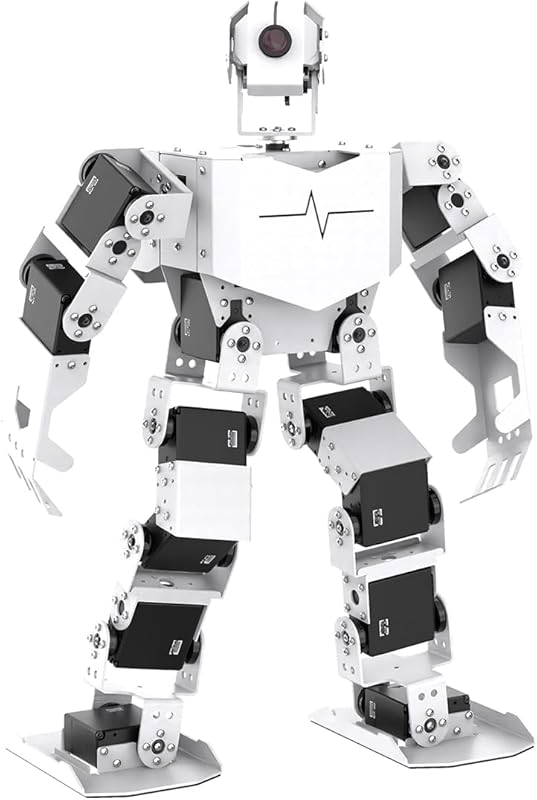
The HIWONDER TonyPi Standard Humanoid Robot is a standout for anyone diving into the world of advanced AI and robotics. This robot boasts impressive AI capabilities, powered by a Raspberry Pi 5, making it an excellent platform for learning and innovation. Its integration with ChatGPT brings a new level of interactive intelligence, allowing for natural communication and complex command understanding.
Key Features That Stand Out
- ✓ Al-Driven & Raspberry Pi Powered for robust performance.
- ✓ AI Large Model ChatGPT Integration for enhanced user-machine interaction.
- ✓ 18 Degrees of Freedom (DOF) for flexible and dynamic movements.
- ✓ AI Vision & Voice Command Recognition for intelligent interaction with its environment.
Why We Recommend It
We absolutely love the TonyPi Standard for its blend of educational depth and cutting-edge AI. It’s a wonderfully well-made and rugged robot that provides a solid learning experience for anyone interested in Python programming and AI development. The tutorials are genuinely helpful, guiding you through programming and various functionalities.
Best For
This humanoid robot is best for AI education, robotics enthusiasts, and students who want to explore advanced programming with Python and Raspberry Pi.
Pros and Cons
Pros:
- Rugged and durable construction for longevity.
- Comprehensive tutorials make programming accessible.
- Excellent customer service and support from Hiwonder.
- Seamless integration with ChatGPT for intelligent interactions.
Cons:
- Initial setup might require some technical familiarity.
- The price point can be a significant investment for hobbyists.
Customer Reviews
Customer Review: “The Hiwonder TonyPi Pro is a great learning experience, it is very well made, it’s rugged and it is very easy to install the many accessories provided. The tutorials provided make it easy to program TonyPi and have hime dancing and walking all over. I highly reccomend this kit, it is easy to assembl”
Customer Review: “10/10 customer service is the best i’ve ever seen in my entire life and the robot is awesome!!”
2. Tonybot Standard Humanoid Robot
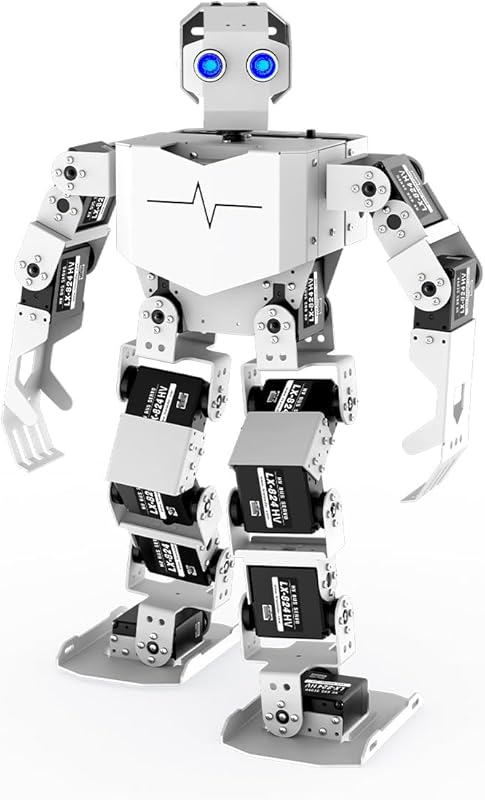
The Tonybot Standard Kit 17DOF Humanoid Robot is a versatile and high-performance option for those eager to dive into robotics and AI. Powered by an ESP32 and equipped with intelligent servos, this humanoid robot offers fluid movements and advanced interaction capabilities. Its multi-platform programming support makes it accessible for learners of all ages, from beginners to advanced users, making it a truly exceptional personal robot.
Key Features That Stand Out
- ✓ High-Performance Humanoid Robot powered by ESP32 with intelligent servos.
- ✓ 3 Programming Options: Supports Arduino, Python, and Scratch.
- ✓ Advanced AI Interaction: Features AI vision and voice interaction.
- ✓ Extensive tutorials and use cases for comprehensive AI learning.
Why We Recommend It
We selected the Tonybot Standard as our Editor’s Choice because of its incredible flexibility in programming. Whether you’re just starting with Scratch or delving into complex Python scripts, this robot supports your learning journey. The AI vision and voice features are robust, allowing for engaging, customizable interactions that truly bring the robot to life.
Best For
This humanoid robot is ideal for STEM education, hobbyists, and anyone looking for a programmable robot that grows with their coding skills across various languages.
Pros and Cons
Pros:
- Versatile programming options cater to all skill levels.
- Intelligent servos provide smooth and precise movements.
- Engaging AI vision and voice modules for interactive projects.
- Durable construction, suitable for repeated experimentation.
Cons:
- Assembly might require some patience and attention to detail.
- The full potential requires dedicated learning of programming.
Customer Reviews
Customer Review: “My son absolutely loves his Tonybot! It was a bit of a project to assemble, but the instructions were clear, and the reward of seeing it come alive with his own code was amazing. The Scratch programming is a great entry point for kids.”
Customer Review: “This robot has been a fantastic educational tool for my college robotics course. The ESP32 integration and Python support allow for really complex projects. The AI vision works surprisingly well for tracking objects.”
3. Humanoid Robots AI Simulation Guide
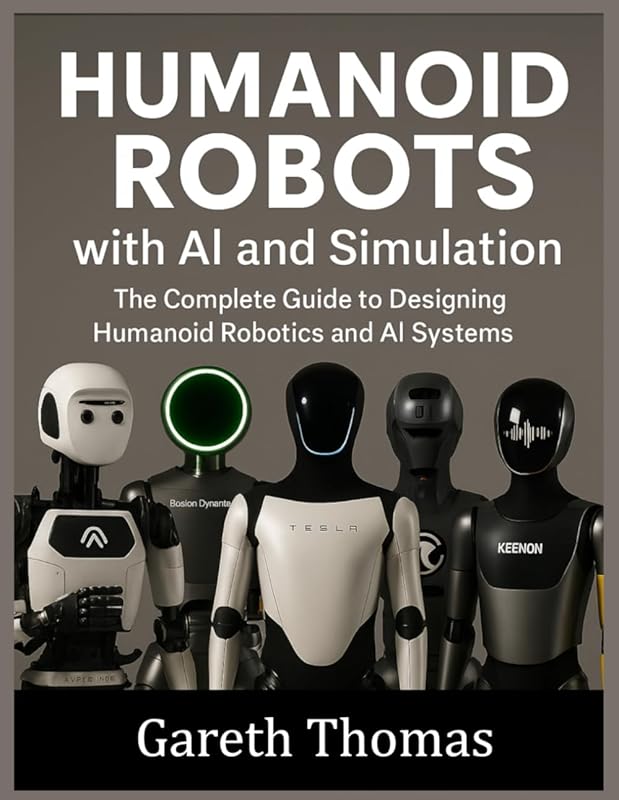
While not a physical robot, the Humanoid Robots with AI and Simulation: Complete Guide to Designing Robotic AI Systems is an invaluable resource for anyone passionate about humanoid robots. It offers a comprehensive dive into the theoretical and practical aspects of designing and implementing AI systems for robotics. For those on a budget or looking for an intellectual investment before a physical one, this guide is an exceptional choice.
Key Features That Stand Out
- ✓ Comprehensive guide covering AI and simulation for humanoid robots.
- ✓ Detailed insights into designing complex robotic AI systems.
- ✓ Explores both theoretical concepts and practical applications.
- ✓ Excellent resource for students, researchers, and hobbyists.
Why We Recommend It
This book is our Best Budget pick because knowledge is indeed power, especially in rapidly evolving fields like robotics. Before investing heavily in hardware, understanding the foundational principles of AI and simulation in humanoid robots can save you time and money. It’s a well-structured guide that offers exceptional value for its price, perfect for complementing your best AI laptops.
Best For
This guide is best for students, academics, aspiring roboticists, and enthusiasts who want to gain a deep theoretical and practical understanding of humanoid robot AI and simulation.
Pros and Cons
Pros:
- Affordable entry point into complex robotics topics.
- Provides a strong theoretical foundation for practical projects.
- Covers a wide range of topics in AI and simulation.
- Enables informed decisions when purchasing or building robots.
Cons:
- Requires dedication to read and comprehend technical information.
- Not a hands-on robotic experience itself.
Customer Reviews
Customer Review: “As an engineering student, this book has been an indispensable resource for my robotics projects. It breaks down complex AI concepts into understandable sections and gives me a solid framework for my own designs. Highly recommended for serious learners.”
Customer Review: “I bought this guide to understand more about the AI behind the humanoid robots I’ve been seeing. It’s thorough and well-written. Definitely not for casual reading, but if you’re committed to learning, it’s fantastic value.”
4. HIWONDER AiNex Standard Humanoid Robot
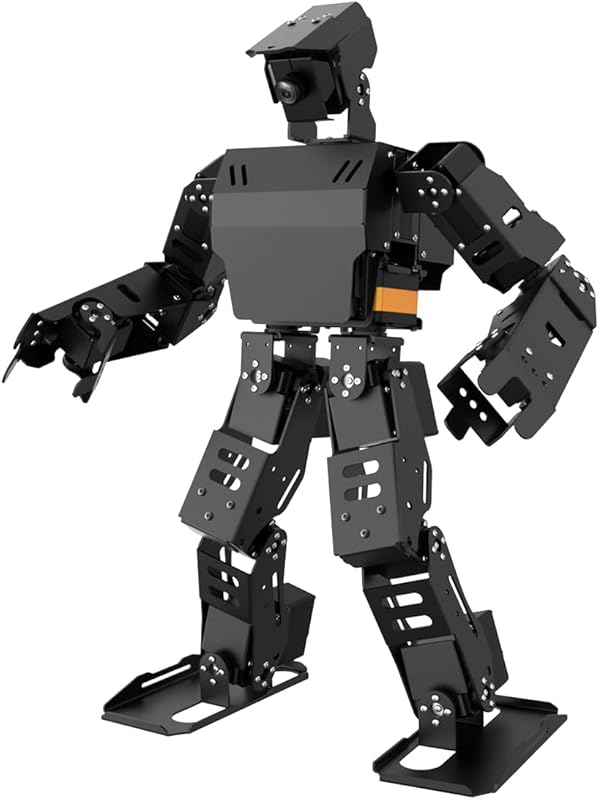
The HIWONDER AiNex Standard Humanoid Robot is a powerhouse for education in robotics, especially for those interested in the Robot Operating System (ROS). Featuring robust hardware configurations, including a Raspberry Pi 5/4B and 24 intelligent serial servos, AiNex is built for advanced learning. Its sophisticated inverse kinematics and multi-platform control methods make it a versatile tool for complex robotic projects.
Key Features That Stand Out
- ✓ Developed upon Robot Operating System (ROS) for advanced robotics projects.
- ✓ High-performance hardware with Raspberry Pi 5/4B and 24 intelligent serial servos.
- ✓ Advanced Inverse Kinematics Gait for flexible pose control and omnidirectional movement.
- ✓ Multiple control methods, including WonderROS app, wireless handle, and PC software.
Why We Recommend It
AiNex truly shines in its commitment to ROS education, offering a solid platform for students and researchers to experiment with real-world robotics challenges. The build quality is exceptional, and the advanced gait planning features make it a joy to program and observe. It’s a significant step up for those looking beyond basic programmable robots.
Best For
This humanoid robot is ideal for ROS education, advanced robotics students, and researchers focusing on AI vision and complex motion planning.
Pros and Cons
Pros:
- Excellent build quality and high-quality components.
- Robust ROS integration provides a powerful development environment.
- Smooth and precise movements due to advanced inverse kinematics.
- Responsive customer service for support and inquiries.
Cons:
- Steep learning curve for those new to ROS.
- Higher price point reflective of its advanced features.
Customer Reviews
Customer Review: “The media could not be loaded.Excellent product. Functions as described, well constructed and very high quality.Arrived quickly, customer service is very responsive and provided information quickly.I highly recommend Hiwonder products.”
Customer Review: “The media could not be loaded.Excellent product. Functions as described, well constructed and very high quality.Arrived quickly, customer service is very responsive and provided information quickly.I highly recommend Hiwonder products.Read more”
5. Robot PU Adorable AI Humanoid STEM Toy
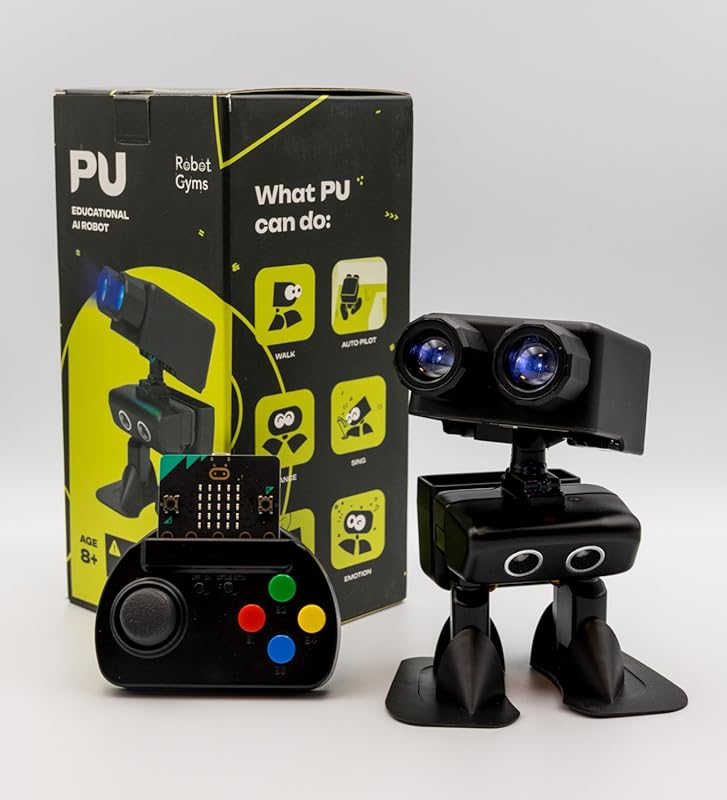
The Robot PU Adorable AI Humanoid STEM Toy is a delightful and engaging entry into the world of robotics, particularly for younger learners. This Micro:bit-powered robot brings fun and education together with its interactive features, including dancing, walking, talking, and self-balancing capabilities. Its adorable design and playful movements make it a captivating tool for introducing STEM concepts.
Key Features That Stand Out
- ✓ Electrifying AI-Powered Dance with moonwalks, spins, and music sync.
- ✓ Multi-Talent Robot: Walks, talks, sings, dances, self-balances, and plays soccer.
- ✓ Smart Autopilot Mode for smooth navigation and obstacle avoidance.
- ✓ Programmable with Micro:bit, perfect for beginner coders.
Why We Recommend It
We recommend the Robot PU because it’s genuinely fun and immediately engaging for kids. Its self-balancing feature is impressive, ensuring smooth movement during its various activities. It’s robust enough to withstand typical play, making it a great investment for encouraging early interest in technology and coding.
Best For
This humanoid robot is best for children and beginners in STEM education, looking for an interactive and programmable toy to learn basic robotics and coding.
Pros and Cons
Pros:
- Highly engaging and entertaining for children.
- Robust design ensures durability during play.
- Self-balancing mechanism works effectively.
- Good entry point for learning Micro:bit programming.
Cons:
- Less advanced features compared to higher-end robots.
- Programming options are simpler, not for advanced users.
Customer Reviews
Customer Review: “This robot has a fun design and immediately feels engaging for kids who are interested in technology and robotics. It walks, dances, and responds well to commands, which makes it entertaining right out of the box. The self-balancing feature works smoothly and helps it stay stable during movement.The”
Customer Review: “Kids love the robot. It moves very playfully being able to dance to a songs beat. I also did not expect it to be this robust. Looks like it take some damage and still preform. Highly recommend!”
6. PuppyPi Advanced Robot Dog
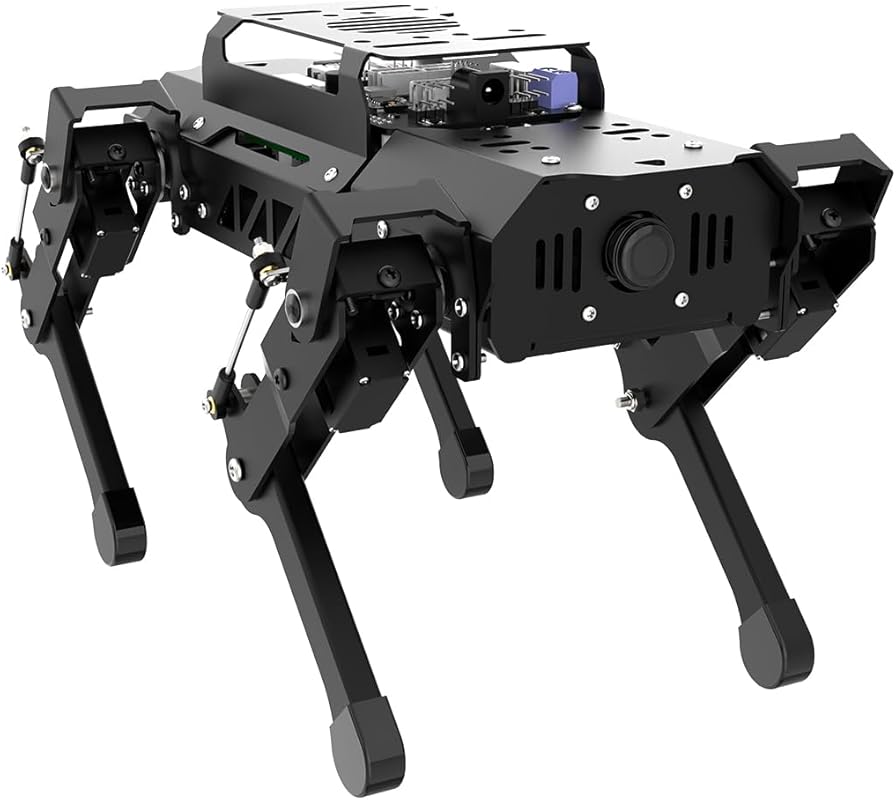
The PuppyPi Advanced Robot Dog stands out as a pioneering educational robot that integrates advanced AI models and embodied intelligence. While not a humanoid robot in form, its sophisticated AI, ROS, and Raspberry Pi 5 core technology make it incredibly relevant for those exploring the cutting edge of robotics. It’s designed for high-performance AI vision and complex behaviors, making it akin to the best personal robots available.
Key Features That Stand Out
- ✓ World’s first educational robot dog integrating multi-modal Large AI Models (ChatGPT).
- ✓ Powered by Raspberry Pi 5 with support for ROS1/ROS2.
- ✓ High-Torque Smart Servos & Inverse Kinematics for fluid and precise movements.
- ✓ Features AI Vision, Voice control, and SLAM Mapping for advanced interactions.
Why We Recommend It
We recommend the PuppyPi Advanced for its phenomenal build quality and the sheer depth of educational opportunities it offers. It’s not just a toy; it’s a powerful platform for developing with ROS2, opening up endless project possibilities for students and developers alike. The integration of ChatGPT and advanced mapping capabilities truly sets it apart.
Best For
This robot dog is best for advanced robotics students, developers, and enthusiasts keen on exploring large AI models, ROS, and complex embodied intelligence in a quadrupedal form.
Pros and Cons
Pros:
- Exceptional build quality and durable platform.
- Deep integration with ROS2 for advanced development.
- ChatGPT AI offers intelligent and interactive capabilities.
- Great for portfolio-building projects in robotics and AI.
Cons:
- Movement can be less fluid than expected for some users.
- Documentation might be challenging for beginners.
Customer Reviews
Customer Review: “Build quality is phenomenal!It’s fun right out of box, but if you want experience developing with ROS2 you will have endless project opportunities, cool stuff you can put in your portfolio while having fun!! The documentation is a little tough to follow but if you have experience with C++ and Python”
Customer Review: “Got my kids the pollen robotics reachy-mini and the puppypi for Xmas as projects.The dog is cool there’s a lot to like about it, well built, solid platform, movement is , like elderly dog , stiff not fluent, the included software is pretty basic.. kids get to mess with specific sensors like lidar e”
7. HIWONDER TonyPi Advanced Humanoid Robot
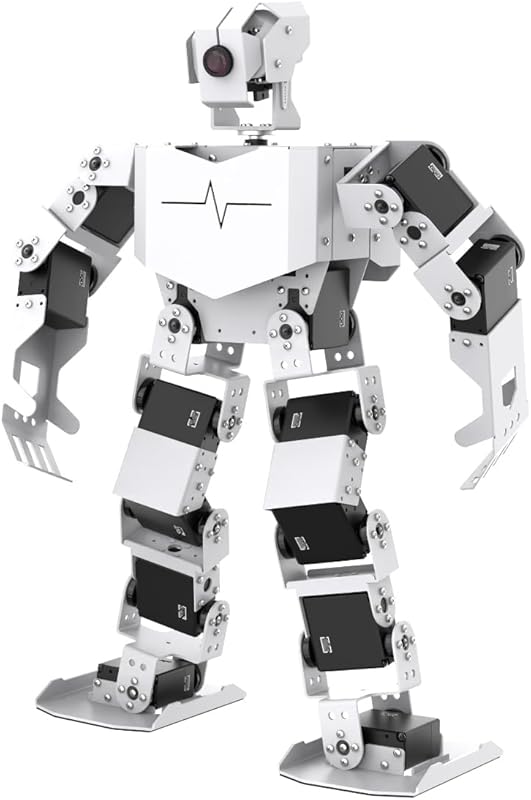
The HIWONDER TonyPi Advanced Humanoid Robot builds upon the standard model with even more sophisticated features for truly embodied intelligence. It integrates multimodal large AI models, including ChatGPT, and boasts 20 Degrees of Freedom for exceptionally nuanced movements. Powered by a Raspberry Pi 5, this humanoid robot is designed for cutting-edge AI education and advanced research.
Key Features That Stand Out
- ✓ World’s first educational humanoid robot with Large AI Model (ChatGPT) and embodied intelligence.
- ✓ Al-Driven & Raspberry Pi Powered for powerful processing.
- ✓ 20 Degrees of Freedom (DOF) for enhanced articulation and movement.
- ✓ AI Voice Command & Recognition for complex and natural interaction.
Why We Recommend It
The TonyPi Advanced pushes the boundaries of what an educational humanoid robot can do, especially with its extensive ChatGPT integration and 20DOF. It’s an ambitious platform for those dedicated to advanced AI and robotics. However, it’s important to note that its advanced nature means a more involved setup and programming process, which can be challenging for non-technical users.
Best For
This humanoid robot is best for experienced robotics enthusiasts, advanced STEM students, and researchers looking to delve into complex AI models and sophisticated robotic control.
Pros and Cons
Pros:
- Highly advanced AI capabilities with ChatGPT integration.
- More degrees of freedom allow for intricate movements.
- Excellent platform for deep learning and AI research.
- Built on Raspberry Pi 5 for powerful computing.
Cons:
- Significant setup and programming knowledge required.
- Instructions can be difficult to follow for non-experts.
- Not suitable for beginners or casual users.
Customer Reviews
Customer Review: “You need to do lots of setup and they do not properly let you know how, chinglish instructions. If you are tech savvy then take your chance i guess.”
Customer Review: “Too difficult to program I thought it came already programmed with pi / Chat gpt. I want to talk to my robot. Can I buy the chat gpt pre programmed on micro drive and insert it in my robot?? I’m not that computer savvy”
8. PuppyPi Ultimate Robot Dog
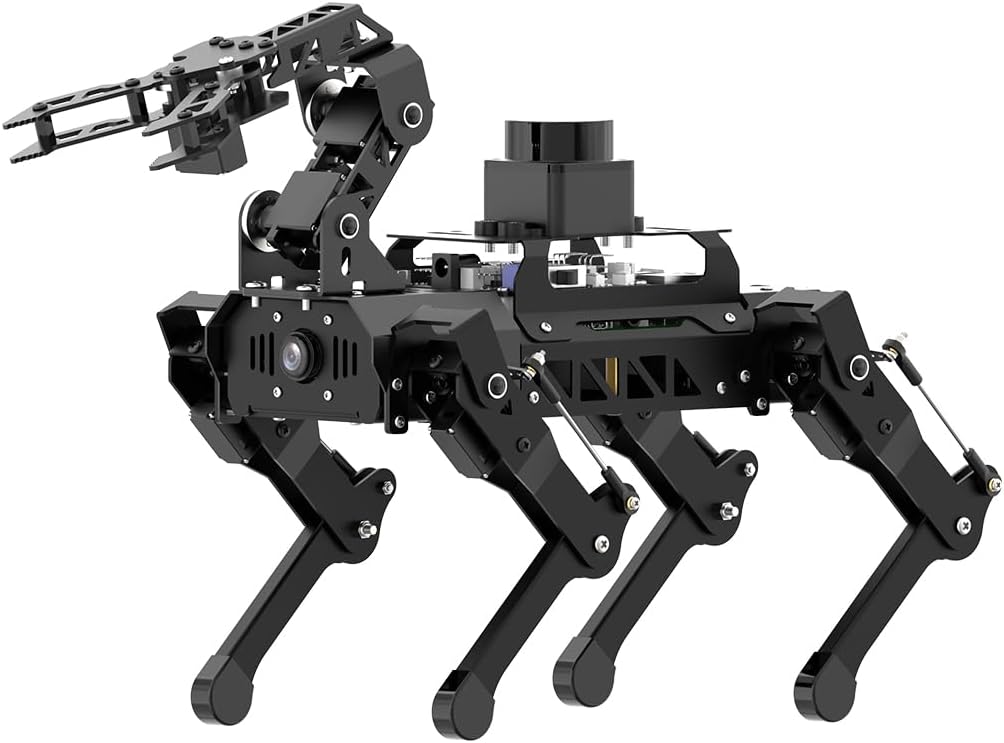
The PuppyPi Ultimate Robot Dog represents the pinnacle of educational robot dogs, integrating the most advanced features for AI and embodied intelligence. Like its Advanced counterpart, it’s powered by a Raspberry Pi 5 and leverages ROS1/ROS2 for complex functionalities. This version offers the full suite of capabilities, including ChatGPT AI, robust vision and voice control, and detailed SLAM mapping.
Key Features That Stand Out
- ✓ Ultimate integration of Large AI Models (ChatGPT) and embodied intelligence.
- ✓ High-performance processing with Raspberry Pi 5 and ROS1/ROS2 support.
- ✓ Equipped with 8 high-torque stainless steel gear servos for superior movement.
- ✓ Comprehensive AI Vision, Voice, and SLAM Mapping capabilities.
Why We Recommend It
If you’re looking for the absolute best in educational robot dogs, the PuppyPi Ultimate is it. It combines top-tier hardware with the most advanced AI and robotics software, providing an unparalleled platform for learning and development. While it requires dedication to master, the potential for complex projects and genuine AI interaction is immense.
Best For
The PuppyPi Ultimate Robot Dog is best for advanced robotics enthusiasts, professional developers, and educational institutions seeking a state-of-the-art platform for AI and robotic research.
Pros and Cons
Pros:
- Cutting-edge AI and robotics technology.
- Superior build quality and component integration.
- Extremely versatile for advanced research and development.
- Powerful Raspberry Pi 5 and ROS system.
Cons:
- Very high price point makes it a significant investment.
- Requires expert-level knowledge in robotics and programming.
Customer Reviews
Customer Review: “The PuppyPi Ultimate is an engineering marvel. It’s incredibly responsive and the SLAM mapping is astonishingly accurate. I’ve been able to implement custom navigation algorithms with ease. Absolutely worth it for serious developers.”
Customer Review: “This robot dog is a fantastic tool for my university’s AI lab. The ChatGPT integration opens up so many possibilities for interactive AI research. It’s challenging but immensely rewarding to work with.”
9. PuppyPi Standard Robot Dog
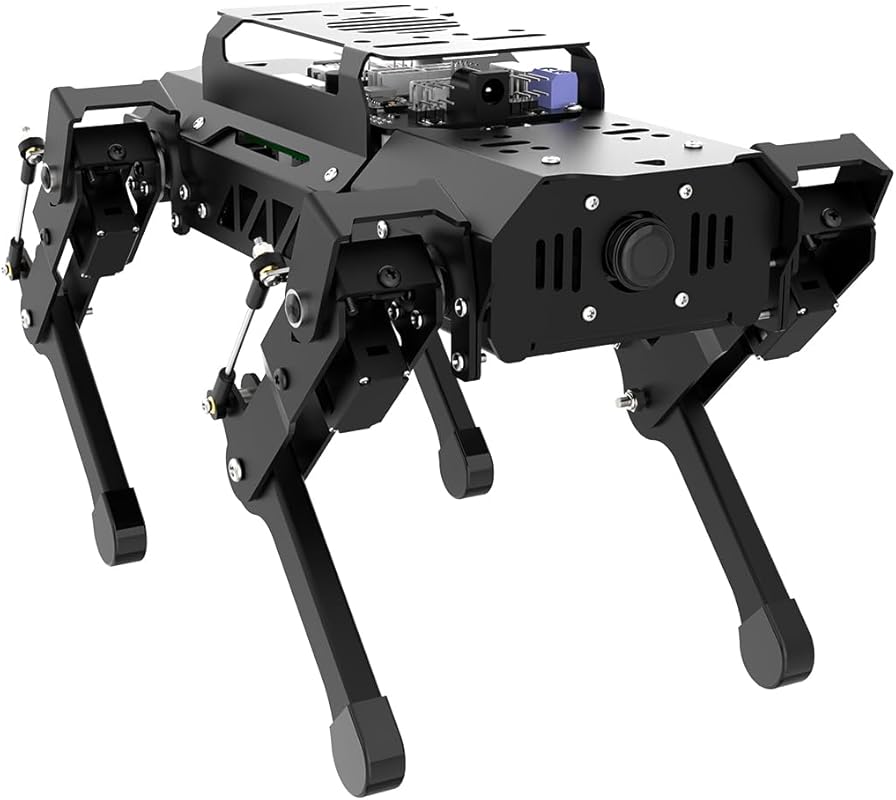
The PuppyPi Standard Robot Dog offers an excellent entry point into the advanced world of AI-powered quadruped robots. While it may be labeled “Standard,” it still integrates powerful features like ChatGPT AI, ROS, vision, voice control, and SLAM mapping, all running on a Raspberry Pi 5. It’s a fantastic educational tool for understanding complex robotics without the ultimate price tag of its advanced siblings.
Key Features That Stand Out
- ✓ Integrates Large AI Models (ChatGPT) for interactive intelligence.
- ✓ Powered by Raspberry Pi 5 with ROS1/ROS2 support.
- ✓ Features 8 high-torque smart servos for stable and controlled movements.
- ✓ Includes AI Vision, Voice control, and SLAM Mapping capabilities.
Why We Recommend It
The PuppyPi Standard is a superb choice for those who want to experience advanced robotics and AI without committing to the top-tier models. Its build quality is impressive, and it offers ample opportunities for learning ROS2 and Python development. Despite being the “standard” version, it’s still a powerful and engaging platform for endless projects and learning.
Best For
This robot dog is best for students, hobbyists, and educators seeking a robust and feature-rich platform to learn about AI, ROS, and quadruped robotics at a more accessible level.
Pros and Cons
Pros:
- Solid build quality provides a durable learning platform.
- Comprehensive features for AI, vision, and navigation.
- Accessible entry into ROS and Raspberry Pi development.
- Good value for the advanced technology included.
Cons:
- Movement fluidity could be improved for some complex gaits.
- Initial learning curve for setting up and programming.
Customer Reviews
Customer Review: “Build quality is phenomenal!It’s fun right out of box, but if you want experience developing with ROS2 you will have endless project opportunities, cool stuff you can put in your portfolio while having fun!! The documentation is a little tough to follow but if you have experience with C++ and Python”
Customer Review: “Got my kids the pollen robotics reachy-mini and the puppypi for Xmas as projects.The dog is cool there’s a lot to like about it, well built, solid platform, movement is , like elderly dog , stiff not fluent, the included software is pretty basic.. kids get to mess with specific sensors like lidar e”
Complete Buying Guide for Humanoid Robots
Essential Factors We Consider
When choosing the best humanoid robots, or even highly advanced personal robots that share similar technologies, several critical factors come into play. First, consider the Degrees of Freedom (DOF). More DOF usually means more fluid and lifelike movement, which is essential for mimicry and complex tasks. Next, dive into the AI capabilities: does it integrate large language models like ChatGPT? How robust are its vision and voice recognition systems? These features significantly impact interaction and autonomy. Another crucial aspect is programming options. Are you looking for a robot that supports Scratch for beginners, or do you need advanced platforms like Python, Arduino, or ROS for in-depth development? The target audience also matters—is it for a child’s STEM introduction, a hobbyist’s project, or serious academic research? Finally, look at the underlying hardware, such as whether it’s powered by a Raspberry Pi or ESP32, which indicates its processing power and potential for expansion. Understanding these factors will help you select a robot that truly aligns with your goals and skill level.
Budget Planning
Investing in humanoid robots or advanced AI robots can range from a modest amount for introductory kits or educational guides to a significant sum for high-performance research platforms. It’s important to set a realistic budget based on your intended use. Entry-level STEM toys and guides are often quite affordable, providing a great starting point without breaking the bank. Mid-range models offer a good balance of features and programmability for serious hobbyists and students. High-end robots, like those featuring cutting-edge AI, numerous DOF, and robust development environments (e.g., ROS), typically come with a higher price tag, reflecting their advanced capabilities and research potential. Remember that the initial purchase is just one part of the investment; consider potential costs for accessories, spare parts, and additional learning resources as you progress in your robotics journey.
Final Thoughts
Choosing the perfect humanoid robot or advanced AI robot is about matching its capabilities with your aspirations. Whether you’re aiming to understand fundamental coding, explore sophisticated AI algorithms, or build complex interactive systems, there’s a robot out there for you. Prioritize features that align with your learning objectives and don’t shy away from options that push your boundaries. The field of robotics is dynamic and exciting, and with the right robot, you’re not just buying a product; you’re investing in a gateway to innovation and discovery.
Frequently Asked Questions
Q: What is a humanoid robot?
A: A humanoid robot is a robot with a body shape built to resemble the human body. This typically includes a torso, a head, two arms, and two legs, though some may only simulate parts of the human form. Their design is often for interacting with human tools and environments, or for studying human locomotion and interaction.
Q: Are these robots difficult to program?
A: The difficulty of programming these robots varies greatly depending on the model and its intended audience. Many educational robots offer beginner-friendly programming interfaces like Scratch, while more advanced models require knowledge of Python, Arduino, or complex robotics frameworks like ROS. Some also come with pre-programmed functions that don’t require coding.
Q: What are humanoid robots used for?
A: Humanoid robots are used for a wide range of purposes, including STEM education, robotics research, entertainment, assisting in hazardous environments, elder care, and even exploring space. Their human-like form allows them to operate in environments designed for humans and perform tasks that require human-like dexterity and interaction.
Q: Can children use these robots?
A: Yes, many humanoid robots and AI robots are specifically designed for children and younger students as STEM toys or educational tools. These models often have simplified programming interfaces, durable designs, and engaging features to introduce kids to robotics and coding in a fun and accessible way. Always check the manufacturer’s recommended age range.
Q: What’s the difference between ROS and Arduino programming for robots?
A: Arduino is an open-source electronics platform based on easy-to-use hardware and software. It’s excellent for controlling individual components (like motors and sensors) and for beginners in embedded systems. ROS (Robot Operating System), on the other hand, is a flexible framework for writing robot software. It’s a collection of tools, libraries, and conventions that aim to simplify the task of creating complex and robust robot behavior across various hardware platforms. ROS is typically used for more advanced robots that require complex navigation, perception, and decision-making.
Exploring the world of humanoid robots reveals a fascinating intersection of engineering, artificial intelligence, and human-machine interaction. From basic programmable toys that spark curiosity to advanced research platforms that push the boundaries of AI, there’s a robot for every interest and skill level. We hope this guide helps you navigate the exciting options available and encourages you to take the plunge into robotics. The future is here, and it’s full of intelligent, interactive companions waiting to be explored. Happyロボット building!